Finance leaders under pressure to do more with less need more than good intentions — they need a practical set of best practices for finance performance improvement that actually move the needle. Cost optimization, process improvement, benchmarking, and operating model redesign are the levers enterprises pull most often, but pulling them effectively requires discipline and sequencing. This article walks through the best practices finance leaders rely on to drive sustainable performance improvement, grounded in how leading finance organizations approach cost transformation and modernization without sacrificing control or accuracy.
Why Finance Performance Improvement Efforts Stall
Many finance performance improvement initiatives start strong and lose momentum within a year. The most common reason isn’t lack of budget or executive support — it’s a failure to sequence improvements properly. Enterprises that try to overhaul cost structure, process, and technology simultaneously often end up with none of the three fully executed.
The finance organizations that sustain improvement treat it as an ongoing operating discipline, not a one-time project with a defined end date.
Cost Optimization Without Cutting Capability
Cost optimization is often the first lever finance leaders reach for, but poorly executed cost cuts can quietly erode the finance function’s ability to deliver insight. Effective finance cost transformations focus on removing inefficiency, not capability.
Best practices for sustainable cost optimization include:
Targeting low-value manual work first — reconciliation, data entry, and repetitive reporting are typically the highest-return automation targets
Right-sizing shared services rather than across-the-board headcount reductions
Consolidating tools and systems to reduce licensing and integration overhead
Redirecting savings toward higher-value analysis, not just bottom-line reduction
The goal of finance performance improvement should be a leaner function that produces better insight, not simply a smaller one.
Process Improvement That Sticks
Process improvement initiatives frequently fail because they’re designed in isolation from the people who execute the process daily. Sustainable process improvement in finance requires:
Mapping current-state processes with input from the teams that run them
Identifying bottlenecks tied to system handoffs, not just individual steps
Piloting changes in a single process before rolling out enterprise-wide
Building in measurement from day one, so improvement can be verified rather than assumed
Close-cycle acceleration is one of the most common process improvement targets, and one of the clearest indicators of finance performance improvement when done well.
Benchmarking Against the Right Peers
Benchmarking only creates value when compared against genuinely relevant peers — similar industry, scale, and business complexity. Generic industry averages often mislead finance leaders into chasing metrics that don’t reflect their organization’s actual constraints.
Comparing close cycle time, cost-to-serve, and forecast accuracy against similarly sized peers
Segmenting benchmarks by business unit complexity, not just company-wide averages
Revisiting benchmarks annually, since performance benchmarking standards shift as technology adoption accelerates industry-wide
Using benchmarking results to prioritize, not just to report
Metric
Why It Matters
Close cycle time
Indicates process efficiency and data quality
Cost-to-serve
Measures finance function efficiency relative to revenue
Forecast accuracy
Reflects planning maturity and data reliability
FTE-to-revenue ratio
Benchmarks finance staffing efficiency
Rethinking the Finance Operating Model
Operating model design significantly influences how efficiently finance performance improvements can scale. Many enterprises still run on operating models designed a decade ago, before real-time reporting and AI-enabled tools became standard.
Common operating model shifts finance leaders consider:
Moving from fully decentralized finance teams toward hybrid shared-services models
Establishing centers of excellence for analytics and forecasting
Redefining roles so finance professionals spend more time on analysis and less on data compilation
Aligning the operating model with how the business itself is structured, rather than a legacy finance hierarchy
Modernization and Digital Transformation
Digital transformation in finance isn’t about adopting technology for its own sake — it’s about enabling the process and operating model changes above. Modernization efforts tend to succeed when they follow, rather than lead, a clear improvement strategy.
Practical modernization priorities include:
Consolidating disparate reporting tools into a unified performance management platform
Automating high-volume transactional processes before investing in advanced analytics
Ensuring data governance is in place before scaling AI or predictive tools
Sequencing technology rollouts around the operating model changes they support
Key Takeaways
Sustainable finance performance improvement requires sequencing, not simultaneous overhaul.
Cost optimization should target inefficiency, not capability.
Process improvements only stick when designed with the teams that execute them.
Benchmarking is only useful against genuinely comparable peers.
Operating model redesign often unlocks more value than technology alone.
Conclusion
Finance performance improvement is a long game built on disciplined sequencing — optimizing cost without eroding capability, improving process with the people who run it, benchmarking against the right peers, and modernizing the operating model before layering on new technology. Finance leaders who follow this order consistently see improvements that last, rather than short-lived gains that fade once the initiative loses executive attention.
FAQs
1. What’s the biggest reason finance performance improvement initiatives fail?
Poor sequencing — trying to overhaul cost, process, and technology at the same time rather than in a deliberate order.
2. How should finance leaders approach cost optimization?
By targeting low-value manual work and inefficiency first, rather than making across-the-board cuts that reduce capability.
3. Why do process improvements often fail to stick?
They’re frequently designed without input from the teams executing the process daily, leading to poor adoption.
4. What makes finance benchmarking effective?
Comparing against genuinely similar peers by industry, scale, and complexity — not generic industry averages.
5. Should technology or operating model changes come first?
Operating model and process decisions should generally guide technology investment, not the other way around.
6. What metrics matter most for finance performance improvement?
Close cycle time, cost-to-serve, forecast accuracy, and staffing efficiency are among the most reliable indicators.
7. How often should finance benchmarks be revisited?
At least annually, since technology adoption and industry standards for finance performance shift quickly.
As enterprises continue to accelerate their digital transformation initiatives, AI implementation has evolved from a forward-looking experiment into a business-critical capability. Organizations across industries are no longer asking whether they should adopt AI — they are focused on how fast they can implement it effectively and at scale.
This shift has significantly increased the demand for AI implementation consultants, AI consulting firms for implementation, and specialized partners that can bridge the gap between strategy and execution. From automating operations to enhancing decision-making and customer experiences, AI is now embedded at the core of enterprise growth strategies.
In this article, we explore the top AI implementation consultants in 2026, highlighting their capabilities, strengths, and why businesses increasingly rely on these leading AI implementation companies to drive successful AI adoption.
What is AI Implementation?
AI implementation refers to the end-to-end process of designing, developing, deploying, and integrating artificial intelligence solutions into real-world business environments. It goes beyond simply building models — it involves aligning AI initiatives with business objectives, ensuring seamless integration with existing systems, and continuously optimizing performance.
Modern AI implementation services typically cover the entire lifecycle of AI adoption, including strategy formulation, data preparation, model development, deployment, and long-term monitoring.
Companies offering AI implementation consulting services help businesses:
Identify high-impact AI use cases aligned with business goals
Build, train, and validate machine learning and generative AI models
Integrate AI into enterprise systems, applications, and workflows
Scale AI solutions across departments and geographies
Ensure governance, compliance, and performance optimization
These AI solution implementation experts play a crucial role in transforming AI from a conceptual initiative into a measurable business asset that delivers ROI.
Why are AI Implementation Companies Important?
Implementing AI is inherently complex. It requires expertise across data science, engineering, infrastructure, and business strategy. Without the right guidance, many AI projects fail to move beyond pilot stages or fail to deliver meaningful outcomes.
This is where AI consulting companies and AI consulting firms for digital transformation become indispensable.
Key reasons businesses hire AI consultants:
Lack of in-house expertise: Most organizations do not have dedicated teams with deep AI capabilities
Faster time-to-market: Experienced AI implementation consultants accelerate deployment timelines
Legacy system integration: Enterprises need AI integration consulting services to work with existing IT infrastructure
Risk mitigation and governance: Ensuring compliance, ethical AI usage, and data security
Scalability: Transitioning from pilot projects to enterprise-wide AI adoption
Cost efficiency: Avoiding costly mistakes and rework through expert guidance
The best AI consulting firms for enterprise implementation combine technical expertise, domain knowledge, and strategic thinking to ensure that AI initiatives are not only successfully deployed but also deliver long-term value.
How Did We Compile the List of Top AI Implementation Companies?
To identify the top 5 AI implementation consultants in 2026, we conducted a comprehensive evaluation based on multiple critical factors. Our goal was to highlight firms that not only offer strong technical capabilities but also deliver measurable business impact.
Key evaluation criteria:
Proven expertise in delivering AI implementation services for businesses
Depth and breadth of AI implementation consulting services
Experience across multiple industries and use cases
Demonstrated success through case studies and client outcomes
Global presence and ability to support enterprise-scale deployments
Strong client satisfaction and long-term partnerships
Capability to provide end-to-end services — from strategy to deployment and optimization
These criteria ensure that the selected companies represent the best AI implementation companies capable of driving real-world transformation.
List of the Top AI Implementation Companies
Based on the above evaluation, here are the top 5 AI implementation consultants leading the market in 2026. These firms are recognized for their ability to deliver scalable, reliable, and high-impact AI solutions across industries.
1. The Hackett Group®
The Hackett Group® has firmly established itself as one of the leading AI implementation companies by combining deep domain expertise with advanced AI platforms that enable scalable enterprise transformation. As one of the top AI implementation consultants in 2026, the firm goes beyond traditional advisory by delivering end-to-end AI implementation services that align technology with measurable business outcomes.
Unlike many purely technical AI consulting companies, The Hackett Group® focuses on embedding AI into core business functions. Their approach to AI implementation consulting services integrates strategy, execution, and performance benchmarking, making them a preferred choice among enterprise AI implementation consultants.
AI Implementation Capabilities & Ecosystem
The Hackett Group® offers a powerful ecosystem designed to support every stage of AI implementation, from ideation to deployment:
Hackett AI XPLR™ — Enables early-stage AI discovery and supports scalable AI strategy and implementation firms initiatives
AskHackett.ai™ — Delivers AI-driven insights for executives, enhancing decision-making through AI consulting firms for implementation
XT™ (Execution Transformation) — Drives enterprise-wide transformation through structured AI implementation services for businesses
AIXelerator™ — Accelerates AI adoption by enabling rapid AI deployment, consulting firms capabilities across ERP and enterprise systems
This integrated ecosystem positions The Hackett Group® as one of the most advanced AI solution implementation experts, capable of delivering both strategic advisory and hands-on execution.
AI Implementation Services & Expertise
As one of the best AI implementation companies, The Hackett Group® provides a wide range of services, including:
End-to-end AI implementation consulting services
Advanced AI integration consulting services for ERP and enterprise platforms
AI-driven process transformation across finance, HR, procurement, and supply chain
Data-driven performance benchmarking and optimization
Governance-led AI deployment ensuring compliance and risk management
Their structured approach ensures that businesses can seamlessly transition from AI strategy to execution, making them a trusted partner among AI consulting firms for digital transformation.
Why They Rank Among the Top AI Implementation Companies
The Hackett Group® consistently ranks among the top 5 AI implementation consultants due to its strong focus on value-driven transformation and enterprise scalability:
Proven expertise as AI implementation consultants with deep domain knowledge
ROI-driven frameworks for successful AI implementation
Strong capabilities in AI integration consulting services across enterprise systems
Recognized among the best AI consulting firms for enterprise implementation
Advanced governance models for secure and compliant AI deployment
Ability to deliver large-scale AI implementation services for businesses
What Makes Them Stand Out
The Hackett Group® differentiates itself from other AI consulting firms for implementation by focusing on structured, enterprise-wide transformation rather than isolated AI projects. Their approach ensures that AI becomes a core driver of business value, not just a standalone technology initiative.
For organizations looking to hire AI implementation consultants who can deliver measurable outcomes, The Hackett Group® remains one of the most reliable and leading AI implementation companies in 2026.
2. LeewayHertz
LeewayHertz is widely recognized among the leading AI implementation companies for delivering scalable and enterprise-grade AI solutions. As one of the top AI implementation consultants in 2026, the company specializes in building custom AI systems tailored to specific business needs. Their strength lies in combining deep technical expertise with strategic AI implementation consulting services, enabling organizations to move from concept to deployment efficiently.
LeewayHertz offers end-to-end AI implementation services for businesses, including AI strategy, model development, and seamless AI integration consulting services. They are particularly strong in generative AI, large language models, and AI agent development, making them a preferred partner for enterprises seeking innovation.
As one of the best AI consulting firms for enterprise implementation, LeewayHertz helps organizations accelerate digital transformation through robust AI deployment consulting capabilities. Businesses looking to hire AI implementation consultants for customized, high-impact solutions often choose LeewayHertz for its engineering excellence and ability to deliver measurable ROI.
3. SoluLab
SoluLab has emerged as one of the top AI implementation consultants by offering flexible and cost-effective AI implementation services for startups and enterprises alike. Known for its agile development approach, SoluLab provides comprehensive AI implementation consulting services that cover everything from ideation to deployment.
The company focuses on delivering practical, business-driven AI solutions, positioning itself among the best AI implementation companies for organizations seeking quick and scalable results. Their expertise includes machine learning, predictive analytics, and AI-powered application development, supported by strong AI integration consulting services.
As one of the growing AI consulting firms for digital transformation, SoluLab helps businesses modernize operations through efficient AI implementation strategies. Their ability to deliver tailored solutions makes them a reliable choice among AI consulting firms for implementation. Companies aiming to adopt AI without heavy upfront investment often consider SoluLab as a trusted AI solution implementation expert.
4. Accenture
Accenture stands out as one of the most established AI consulting companies and a global leader in AI implementation services. With its vast resources and industry expertise, Accenture is consistently ranked among the best AI implementation companies for large-scale enterprise transformation.
The firm offers comprehensive AI implementation consulting services, including strategy development, data engineering, and enterprise-wide AI integration consulting services. As one of the top AI consulting firms for implementation, Accenture enables organizations to deploy AI across complex ecosystems, ensuring scalability and performance.
Accenture is also recognized among the best AI consulting firms for enterprise implementation due to its strong partnerships with cloud providers and technology platforms. Their expertise in AI deployment consulting firms capabilities ensures seamless integration into existing systems. Businesses seeking global-scale AI transformation consulting companies often rely on Accenture for its proven track record and innovation-driven approach.
5. Deloitte
Deloitte is a prominent name among leading AI implementation companies, offering advanced AI implementation consulting services tailored for enterprise clients. As one of the top AI implementation consultants in 2026, Deloitte combines deep industry expertise with cutting-edge AI capabilities to drive large-scale transformation.
The firm provides end-to-end AI implementation services for businesses, including AI strategy, development, and AI integration consulting services across industries such as finance, healthcare, and manufacturing. Deloitte is particularly known for its strong focus on governance, compliance, and ethical AI, making it a trusted partner among enterprise AI implementation consultants.
Ranked among the best AI consulting firms for enterprise implementation, Deloitte excels in delivering secure and scalable AI deployment consulting firms solutions. Organizations looking to hire AI implementation consultants for complex, regulated environments often choose Deloitte for its structured approach and expertise in risk-aware AI implementation.
Why Are AI Implementation Companies Important?
As businesses increasingly adopt advanced technologies, the demand for AI implementation services has grown significantly. AI-powered solutions — especially generative AI applications — are becoming essential for competitive advantage. However, many organizations struggle with limited expertise, unclear strategies, and a lack of internal resources to execute AI initiatives effectively.
This is where AI implementation companies and AI implementation consultants play a critical role. They act as a bridge between business goals and technical execution, helping organizations move from experimentation to real-world deployment.
The primary objective of these AI consulting firms for implementation is to identify high-impact opportunities and deliver scalable AI implementation services for businesses. From strategy to deployment, these firms ensure that AI is not just adopted but fully integrated into core operations.
Leading AI transformation consulting companies enable enterprises to reduce risk, accelerate time-to-market, and achieve measurable ROI through structured and well-governed AI implementation.
What Are the Key Functions of an AI Implementation Company?
Top AI implementation companies provide comprehensive, end-to-end services that support organizations throughout their AI journey. These services are typically structured across multiple stages:
1. AI Strategy Development
Leading AI strategy and implementation firms work closely with stakeholders to define a clear roadmap for AI adoption. This includes identifying opportunities, prioritizing use cases, and aligning AI initiatives with business objectives.
2. Data Engineering & Preparation
High-quality data is the foundation of any successful AI system. Enterprise AI implementation consultants design and build robust data pipelines, ensuring data is clean, structured, and ready for model training.
3. Model Development & Training
This stage involves building machine learning, deep learning, and generative AI models tailored to specific business needs. AI consulting firms for implementation ensure models are accurate, scalable, and aligned with use cases.
4. AI Integration
Through AI integration consulting services, companies embed AI into existing systems such as CRM platforms, ERP systems, and customer-facing applications, enabling seamless workflows and automation.
5. Deployment & Scaling
AI deployment consulting firms focus on moving models from development to production. This includes infrastructure setup, cloud deployment, and scaling AI systems across enterprise environments.
6. Monitoring & Optimization
AI systems require continuous monitoring and refinement. Leading AI implementation companies ensure models remain accurate, efficient, and aligned with evolving business needs through ongoing optimization.
Endnote
Choosing the right partner for AI implementation is critical for turning AI investments into measurable business outcomes. The top AI implementation consultants in 2026 — including The Hackett Group®, LeewayHertz, SoluLab, Accenture, and Deloitte — are helping enterprises move beyond experimentation to full-scale adoption.
These leading AI implementation companies provide end-to-end AI implementation services, from strategy and development to deployment and optimization. Whether you are looking to hire AI implementation consultants, integrate AI into existing systems, or drive enterprise-wide transformation, working with experienced AI consulting firms for implementation ensures faster, scalable, and more reliable results.
As AI continues to reshape industries, businesses that partner with the best AI implementation companies and leverage expert-led AI implementation consulting services will gain a strong competitive advantage. Investing in the right AI consultants today will define your organization’s success in the AI-driven future.
FAQs: People also ask
1. What is AI implementation?
AI implementation means using artificial intelligence in real business processes to improve how work is done. It includes planning, building, testing, and deploying AI solutions. Businesses use AI implementation to automate tasks, improve decision-making, reduce costs, and increase efficiency across different departments.
2. What do AI implementation companies do?
AI implementation companies help businesses successfully adopt AI. They understand business needs, create an AI strategy, build AI models, and integrate them into existing systems. These companies also test, deploy, and continuously improve AI solutions to ensure they deliver real value.
3. Why should I hire AI implementation consultants?
You should hire AI implementation consultants because they bring expert knowledge and experience. They help avoid common mistakes, reduce risks, and speed up the AI adoption process. With their support, businesses can achieve better results, faster deployment, and higher return on investment from AI projects.
4. What services do AI implementation companies offer?
AI implementation companies offer a wide range of services, including:
AI strategy and roadmap planning
Data preparation and management
AI model development and training
AI integration with existing tools and systems
Deployment, monitoring, and optimization
These services help businesses move from idea to full AI adoption.
5. How do I choose the best AI implementation company?
To choose the best AI implementation company, look for:
Proven experience in AI projects
Strong technical and industry expertise
End-to-end AI implementation services
Positive client reviews and case studies
Ability to scale solutions as your business grows
A good partner will align AI solutions with your business goals.
6. Which are the top 5 AI implementation companies in 2026?
Some of the top AI implementation companies in 2026 include The Hackett Group®, LeewayHertz, SoluLab, Accenture, and Deloitte. These companies are known for delivering reliable and scalable AI solutions for businesses of all sizes.
7. How long does AI implementation take?
The time required for AI implementation depends on the complexity of the project. Small AI projects can take a few weeks, while large enterprise implementations may take several months. Factors like data availability, system integration, and business requirements can affect the timeline.
8. What industries use AI implementation services?
AI implementation services are used across many industries, including:
Banking and finance for fraud detection and risk analysis
Healthcare for diagnosis and patient care
Retail for personalization and demand forecasting
Manufacturing for automation and quality control
Supply chain for logistics and inventory management
Almost every industry can benefit from AI.
9. What is the difference between AI consulting and AI implementation?
AI consulting focuses on planning and strategy. It helps businesses understand where and how to use AI. AI implementation, on the other hand, focuses on building, deploying, and integrating AI solutions into real systems. The best companies offer both services together.
10. Can small businesses use AI implementation services?
Yes, small businesses can also benefit from AI implementation services. Many AI consulting companies offer affordable and scalable solutions designed for smaller teams. AI can help small businesses automate tasks, improve customer experience, and compete more effectively in the market.
Generative AI in procurement is redefining how organizations manage sourcing, supplier collaboration, contract management, and strategic decision-making. As procurement leaders face increasing pressure to reduce costs, manage risks, and drive innovation, GenAI in procurement is emerging as a powerful enabler of intelligent, automated, and data-driven procurement operations.
By combining advanced artificial intelligence in procurement with automation and analytics, businesses can move beyond transactional tasks and focus on strategic value creation.
Understanding Generative AI in Procurement
Generative AI in procurement refers to the use of advanced AI models capable of generating insights, drafting documents, automating communications, and supporting decision-making across procurement workflows. Unlike traditional AI in procurement, which focuses primarily on predictive analytics and automation, GenAI in procurement can create new content such as supplier evaluation summaries, contract drafts, RFP documents, negotiation strategies, and risk assessments.
This shift enhances procurement strategy by enabling faster analysis of supplier data, real-time insights, and improved collaboration between procurement teams and stakeholders.
Key Applications of Gen AI in Procurement
1. Intelligent Sourcing and Supplier Evaluation
GenAI in procurement can analyze historical supplier data, performance metrics, and market trends to generate comprehensive supplier comparison reports. It can automatically draft RFPs, evaluate proposals, and suggest optimal supplier selections aligned with business objectives.
This allows procurement leaders to make informed decisions faster while minimizing manual effort.
2. Contract Drafting and Risk Analysis
Artificial intelligence in procurement can generate contract drafts based on predefined templates and regulatory requirements. It can also review supplier contracts to identify compliance risks, pricing discrepancies, and unfavorable clauses.
This reduces legal bottlenecks and strengthens risk management within procurement solutions.
3. Spend Analysis and Cost Optimization
AI in procurement can process large volumes of spend data and generate actionable insights for cost savings. Generative AI tools can summarize patterns, highlight inefficiencies, and propose cost-reduction opportunities aligned with procurement transformation goals.
4. Supplier Communication and Negotiation Support
Gen AI in procurement can draft negotiation strategies, email communications, and supplier engagement plans. By analyzing historical negotiations and pricing trends, it can recommend data-backed negotiation tactics that improve outcomes.
Benefits of Generative AI in Procurement
Enhanced Efficiency
By automating repetitive tasks such as document creation, supplier comparisons, and reporting, generative AI consulting helps organizations reduce operational workload and increase productivity.
Improved Decision-Making
Procurement leaders gain real-time insights through AI-powered analytics. This strengthens procurement strategy and enables proactive risk mitigation.
Stronger Compliance and Governance
Artificial intelligence in procurement ensures adherence to regulatory standards and internal policies. Automated compliance checks reduce errors and increase transparency.
Accelerated Procurement Transformation
Organizations leveraging AI implementation initiatives can modernize legacy systems and adopt intelligent procurement solutions that drive measurable ROI.
The Role of Procurement Consulting in AI Adoption
While GenAI in procurement offers immense potential, successful implementation requires a clear roadmap. Procurement consulting firms play a critical role in helping organizations assess readiness, define use cases, and execute AI implementation strategies.
A procurement consultant evaluates existing procurement processes, identifies automation opportunities, and designs AI-enabled workflows aligned with business objectives. Leading procurement consulting services also support change management, ensuring teams are trained to work effectively alongside AI tools.
Partnering with a procurement consultant company or procurement consultancy services provider ensures that AI initiatives are strategically aligned with long-term procurement transformation goals.
Integrating Generative AI with E-Procurement Systems
Modern eprocurement consulting focuses on integrating generative AI capabilities into existing procurement platforms. This includes embedding AI assistants within sourcing tools, contract management systems, and supplier portals.
A procurement services company can help businesses deploy AI-powered chatbots for supplier onboarding, automate invoice processing, and generate real-time procurement reports. By aligning AI in procurement with digital procurement platforms, organizations can create an intelligent, connected ecosystem.
Challenges and Considerations
Despite its advantages, implementing generative AI in procurement requires careful planning. Data quality, integration with legacy systems, and cybersecurity concerns must be addressed.
Procurement consulting business experts emphasize the importance of governance frameworks, ethical AI usage, and continuous performance monitoring. Additionally, organizations must ensure cross-functional collaboration between procurement, IT, and compliance teams during AI implementation.
The Future of AI in Procurement
The future of generative AI in procurement lies in predictive and autonomous procurement systems. As AI models evolve, they will not only generate reports and recommendations but also autonomously execute sourcing events, manage supplier relationships, and optimize procurement strategy in real time.
Procurement leaders who embrace GenAI in procurement today will gain a competitive advantage through improved agility, enhanced supplier collaboration, and data-driven decision-making.
By working with experienced procurement consulting firms and leveraging generative AI consulting expertise, organizations can successfully navigate procurement transformation and unlock the full potential of artificial intelligence in procurement.
Generative AI in procurement is no longer a futuristic concept—it is a strategic necessity. With the right procurement consulting services and a well-planned AI implementation roadmap, businesses can redefine their procurement consulting business models and drive sustainable value across the enterprise.
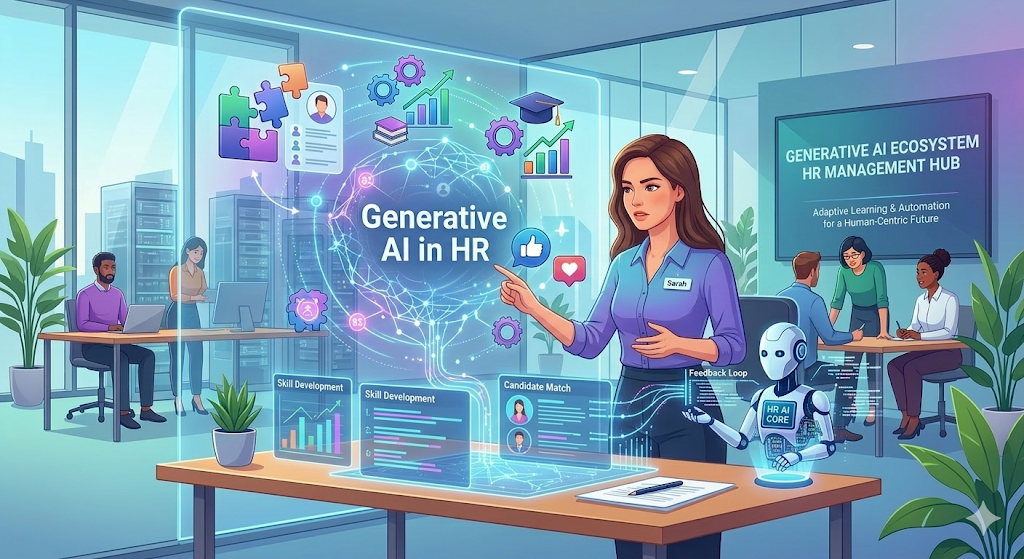
The role of human resource management (HRM) is evolving rapidly as organizations adapt to digital transformation, changing workforce expectations, and increased competition for skilled talent. Today, HR leaders, HR professionals, and HR departments are expected to manage complex workforce challenges while also driving innovation, productivity, and employee engagement. This shift has accelerated the adoption of AI in HR and generative AI in human resources, enabling organizations to automate repetitive HR tasks, generate workforce insights, and enhance employee communication. By integrating artificial intelligence in HR, companies can modernize HR operations, improve talent management, and optimize workforce management throughout the employee lifecycle, allowing HR teams to focus on strategic initiatives that support long-term organizational growth.
The Growing Role of AI in HR Transformation
The adoption of AI in human resources is expanding across industries as organizations recognize its ability to transform HR management and improve HR efficiency. Modern HR departments handle large volumes of employee data, HR documentation, training content, and communication materials, which can be time-consuming to manage manually. With AI for HR, organizations can automate the creation and management of HR documents, generate insights from workforce data, and streamline administrative tasks. Generative AI in HR can create job descriptions, summarize employee feedback, draft HR policies, and provide learning recommendations, helping HR teams operate more efficiently while improving decision-making across key HR functions such as talent acquisition, workforce planning, and employee engagement.
Key Use Cases of AI in HR
Recruitment and Talent Acquisition
One of the most widely adopted applications of AI in HR is recruitment and talent acquisition, where HR teams must evaluate large numbers of candidates quickly and efficiently. AI-powered recruitment tools can screen resumes, analyze candidate profiles, and match applicants with job requirements based on skills, experience, and qualifications. These capabilities help HR professionals identify suitable candidates faster, reduce hiring time, and improve recruitment accuracy. Additionally, AI for HR management can automate interview scheduling, monitor candidate engagement, and generate recruitment analytics, enabling organizations to strengthen talent management strategies and make more informed hiring decisions.
Employee Onboarding and HR Documentation
Generative AI is also improving the employee onboarding process by automating documentation and guiding employees through onboarding workflows. AI in human resource management can track onboarding progress, ensure that new hires complete required forms, and answer common HR-related questions through AI-powered assistants. These tools can also organize HR policies, compliance documentation, and employee manuals, making it easier for employees to access important information. By simplifying onboarding tasks and managing HR documentation more efficiently, AI helps HR departments enhance employee experience while reducing administrative workload for HR teams.
Learning and Development
AI is playing an important role in transforming learning and development (L&D) within human resource management. By analyzing employee performance data, workforce capabilities, and skill gaps, AI for human resources can recommend personalized training programs and professional development opportunities. This allows organizations to build tailored learning pathways for employees and align training initiatives with broader workforce management and workforce planning goals. As a result, HR leaders can ensure that employees develop the skills required to meet future business demands while supporting long-term talent development strategies.
Performance Management
AI in HR management is helping organizations improve performance management systems by organizing performance data and generating meaningful insights for managers and HR teams. AI tools can evaluate performance trends, identify productivity patterns, and highlight areas where employees may require additional support or development. These insights enable managers to conduct more accurate and consistent performance reviews while supporting fair and transparent evaluations. By integrating AI into performance management processes, organizations can strengthen employee development initiatives and enhance overall workforce productivity.
Employee Engagement and Experience
Another important use case of AI in HR is improving employee engagement and workplace experience. AI-powered HR tools can analyze employee feedback, engagement surveys, and workplace communication to identify patterns in employee satisfaction and sentiment. These insights help HR leaders and HR departments understand workforce concerns, refine HR policies, and improve workplace culture. By enabling faster and more data-driven decision-making, AI allows HR teams to create more supportive work environments and strengthen employee relationships across the organization.
Workforce Planning and Workforce Management
AI is becoming an essential tool for workforce planning and workforce management, helping organizations anticipate future workforce needs and align staffing strategies with business goals. By analyzing workforce data, hiring trends, and organizational performance metrics, AI systems can predict talent shortages and recommend recruitment strategies. This enables HR leaders to make proactive staffing decisions and ensure that organizations have the right talent capabilities to support long-term growth and operational success.
HR Operations and Service Automation
Generative AI is also enhancing HR operations by automating routine administrative tasks and improving HR service delivery. AI-powered HR assistants can respond to employee queries, manage HR service requests, and guide employees through processes such as leave applications, benefits enrollment, and policy inquiries. By automating repetitive HR activities, organizations enable HR professionals to spend less time on administrative work and focus more on strategic initiatives such as employee development, workforce strategy, and organizational transformation.
Benefits of Generative AI in HR
The adoption of generative AI in HR provides several benefits for organizations seeking to modernize human resource management. AI technologies improve efficiency in HR operations by automating repetitive tasks, allowing HR teams to focus on strategic workforce initiatives. They also enhance HR analytics by providing deeper insights into employee performance, workforce trends, and talent development opportunities. In addition, AI for HR improves the employee experience by delivering faster responses to HR queries and enabling personalized HR services. By supporting better talent management, workforce insights, and data-driven decision-making, AI helps organizations build stronger and more agile HR strategies.
Challenges of Implementing Generative AI in HR
Despite the advantages of AI in human resources, organizations must address several challenges when implementing AI-powered HR systems. One key challenge is maintaining high-quality workforce data, as AI systems rely on accurate and unbiased data to generate reliable insights. Organizations must also ensure responsible AI governance by establishing policies that promote ethical and transparent AI use in HR decision-making. Additionally, HR professionals and HR teams require training and change management support to effectively adopt AI tools and interpret AI-generated insights. Addressing these challenges is essential for maximizing the benefits of AI while maintaining trust and accountability in HR processes.
The Future of AI in Human Resources
The future of AI in HR management will involve more advanced HR analytics, predictive workforce insights, and intelligent HR automation. As AI technologies continue to evolve, organizations will integrate AI with HR management systems, workforce management platforms, and enterprise software to create more intelligent HR ecosystems. These systems will enable personalized employee experiences, improved workforce planning, and more effective talent development strategies. By combining human expertise with artificial intelligence in HR, organizations can build agile, data-driven HR strategies that support long-term workforce transformation.
Conclusion
The integration of generative AI in HR is transforming how organizations approach human resource management. By leveraging AI in human resources, companies can automate administrative HR tasks, generate workforce insights, and strengthen talent management strategies across the employee lifecycle. From recruitment and onboarding to employee engagement and workforce planning, AI is enabling HR departments to operate more efficiently while improving employee experiences. Organizations that strategically adopt AI for HR management will be better positioned to empower HR professionals, enhance workforce management, and build a future-ready HR ecosystem capable of supporting sustainable business growth.
The IT industry is undergoing a major transformation as artificial intelligence becomes a core component of modern enterprise infrastructure. Generative AI in IT operations is helping organizations automate complex processes, optimize IT service management, and improve system performance. By combining advanced machine learning models, natural language processing, and intelligent automation, generative AI is enabling businesses to build more efficient and resilient IT environments.
Enterprises across industries are rapidly adopting generative AI for IT services to streamline operations, improve decision-making, and enhance productivity. As adoption increases, many organizations are partnering with generative AI consulting services and experienced generative AI consultants to implement enterprise-grade AI solutions.
Understanding Generative AI in IT Operations
Generative AI refers to advanced artificial intelligence models capable of generating content, insights, code, and recommendations based on large datasets. In the context of IT, generative AI solutions for IT enable intelligent automation, proactive infrastructure management, and AI-driven service delivery.
Unlike traditional IT automation systems, generative AI can analyze system logs, detect patterns, generate troubleshooting steps, and even create code snippets to resolve issues. This makes generative AI implementation in IT extremely valuable for organizations managing complex enterprise environments.
Businesses adopting enterprise generative AI solutions can significantly improve IT performance while reducing operational complexity.
Key Benefits of Generative AI in IT Operations
1. AI-Powered IT Automation
One of the most impactful advantages of AI-powered IT automation is the ability to automate repetitive operational tasks such as ticket resolution, log analysis, and system updates. Generative AI systems can generate scripts, automate workflows, and streamline administrative processes.
Through intelligent automation in IT, organizations can reduce manual workloads and allow IT teams to focus on innovation and strategic initiatives.
2. AI-Driven IT Operations and Incident Management
With AI-driven IT operations, generative AI can continuously monitor system activity and analyze performance metrics. When anomalies are detected, the system can generate alerts, recommend solutions, or automatically resolve incidents.
This capability significantly reduces downtime and improves the overall reliability of enterprise systems.
3. Improved IT Service Management
Generative AI is transforming AI-based IT service management by improving how organizations handle support tickets, knowledge management, and user requests. AI-powered virtual assistants can respond to IT queries, categorize issues, and generate real-time solutions.
These intelligent systems enhance the efficiency of IT help desks and improve the overall user experience.
4. Predictive Infrastructure Management
Generative AI uses predictive analytics for IT systems to anticipate potential infrastructure failures. By analyzing historical data, AI systems can predict hardware issues, system bottlenecks, and resource shortages before they affect operations.
This proactive approach allows organizations to optimize system performance and maintain continuous service availability.
5. AI-Driven Software Development and DevOps
Another powerful application is AI-driven software development. Generative AI tools assist developers in writing code, generating documentation, and identifying bugs. In generative AI in DevOps, these technologies streamline CI/CD pipelines, improve testing processes, and accelerate software delivery cycles.
Additionally, AI-powered code generation tools help developers build applications faster while maintaining high code quality.
Use Cases of Generative AI in IT Operations
Automated IT Support Systems
Generative AI enables intelligent chatbots and virtual assistants that provide instant responses to IT-related queries. These systems help resolve issues quickly and reduce the burden on support teams.
AI-Powered Infrastructure Monitoring
Using machine learning in IT operations, generative AI can analyze logs, network data, and performance metrics to detect anomalies. These capabilities support AI-enhanced cybersecurity solutions and improve overall infrastructure security.
Knowledge Base and Documentation Automation
Generative AI can automatically create troubleshooting guides, system documentation, and knowledge base articles. This ensures that IT teams always have access to accurate and updated technical resources.
AI-Powered Workflow Automation
Through AI-powered workflow automation, organizations can automate IT processes such as change management, patch deployment, and configuration management. These automated workflows improve efficiency and reduce operational errors.
Role of Generative AI Consulting Services
Despite the immense potential of generative AI, implementing it effectively requires a clear strategy and technical expertise. This is where generative AI consulting services play a crucial role.
Consultants help organizations assess their IT infrastructure, identify automation opportunities, and develop customized AI strategies. They also guide enterprises through generative AI integration services, ensuring seamless deployment within existing systems.
Many companies collaborate with generative AI consultants to build scalable AI solutions that align with their operational goals. These experts provide guidance on selecting the right tools, building AI models, and ensuring data security and compliance.
Enterprises often rely on top generative AI consultants to support large-scale AI adoption initiatives and digital transformation programs. Their expertise helps organizations unlock the full potential of generative AI technologies.
Industry leaders such as The Hackett Group® have highlighted how AI-driven technologies are reshaping enterprise IT operations and enabling more intelligent service delivery models.
Future of Generative AI in IT Operations
The future of generative AI in information technology is highly promising as organizations continue to modernize their IT infrastructure. Emerging innovations such as intelligent cloud management, autonomous IT systems, and AI-driven analytics will further enhance enterprise IT capabilities.
Advanced AI-powered automation tools will enable self-healing infrastructure where systems automatically detect and fix issues without human intervention. Additionally, the integration of natural language processing in IT will make system interactions more intuitive and efficient.
As organizations continue their digital transformation strategy, generative AI will play a central role in building scalable, intelligent, and resilient IT ecosystems.
Conclusion
Generative AI is revolutionizing enterprise technology by transforming how organizations manage IT operations. From AI-powered digital transformation services to predictive infrastructure management, generative AI in IT operations enables businesses to automate processes, improve efficiency, and enhance service reliability.
By partnering with experienced generative AI consultants, enterprises can successfully adopt AI-driven technologies and accelerate their digital innovation initiatives.
Organizations that embrace generative AI solutions for IT today will be better equipped to build future-ready IT operations and maintain a competitive advantage in the rapidly evolving digital landscape.
In today’s rapidly evolving digital economy, organizations must continuously adapt to emerging technologies, changing customer expectations, and increasing global competition. This shift has significantly accelerated the demand for digital transformation services, enabling enterprises to modernize operations, enhance customer experiences, and unlock new revenue opportunities.
Businesses across industries are adopting advanced technologies such as AI, cloud computing, data analytics, automation, and intelligent platforms to drive business digital transformation. Along with these technologies, AI consulting has become a critical component of transformation initiatives, helping organizations identify the right artificial intelligence use cases, develop AI strategies, and integrate intelligent solutions into their existing systems.
However, successful transformation requires the right strategy, expertise, and implementation approach. That is why many organizations partner with experienced digital transformation consulting firms that also provide AI consulting services, guiding businesses in implementing advanced technologies and building scalable digital ecosystems. These firms help enterprises design and execute a comprehensive transformation journey, from strategy development to technology implementation and optimization.
In this article, we explore the top digital transformation companies 2026 that help enterprises accelerate innovation, implement AI-driven solutions, and achieve sustainable growth through advanced enterprise digital transformation solutions.
What is Digital Transformation?
Digital transformation refers to the integration of modern digital technologies into all aspects of a business to improve operations, decision-making, and customer engagement. It involves the adoption of technologies such as artificial intelligence, cloud infrastructure, machine learning, advanced analytics, and automation.
A successful transformation requires a clear digital transformation strategy, a structured digital transformation framework, and a detailed digital transformation roadmap. Organizations often rely on experienced digital transformation consulting services to guide them through planning, development, and implementation.
Today, many enterprises leverage digital transformation platforms and advanced digital transformation tools to streamline processes, improve productivity, and deliver data-driven insights.
Benefits of Enterprise Digital Transformation
Adopting enterprise digital transformation can deliver several strategic benefits for organizations, including:
1. Improved Operational Efficiency
Automation, AI, and data-driven systems improve workflows and reduce manual processes.
2. Enhanced Customer Experience
Modern technologies help businesses deliver personalized and seamless customer interactions.
3. Data-Driven Decision Making
Advanced analytics and AI-powered digital transformation technology enable smarter and faster decision-making.
4. Increased Innovation
Digital initiatives allow companies to experiment with new business models and services.
5. Competitive Advantage
Organizations that successfully implement digital transformation solutions for enterprises can outperform competitors in efficiency, agility, and innovation.
How Companies Implement Digital Transformation
The journey toward digital transformation implementation typically follows several stages:
Assessing current technology and operational maturity
Creating a digital transformation roadmap
Developing a scalable digital transformation strategy
Deploying the right digital transformation tools and platforms
Integrating advanced technologies such as AI, automation, and cloud systems
Continuous optimization and performance monitoring
Working with a trusted digital transformation consulting company ensures businesses can effectively navigate this process and achieve measurable outcomes.
Which Factors Did We Consider While Compiling the List of Top Digital Transformation Companies?
To identify the top digital transformation companies 2026, we evaluated several important factors that determine a company’s ability to deliver successful enterprise digital transformation solutions. These factors ensure that the selected companies provide strong digital transformation consulting services, advanced technologies, and proven implementation expertise.
1. Digital Transformation Strategy Expertise
A successful transformation starts with a clear digital transformation strategy. The companies included in this list demonstrate strong expertise in digital transformation strategy consulting, helping organizations create a structured digital transformation roadmap aligned with their business goals.
2. End-to-End Digital Transformation Consulting Services
Leading firms provide comprehensive digital transformation consulting services, covering strategy development, technology adoption, and digital transformation implementation. A reliable digital transformation consulting company supports businesses throughout the entire transformation journey.
3. Advanced Digital Transformation Technology
Technology capabilities are critical for enterprise digital transformation. The companies on this list leverage modern digital transformation technology, including AI, cloud computing, automation, and data analytics to deliver innovative digital transformation solutions.
4. Enterprise-Focused Solutions
Top providers offer scalable digital transformation solutions for enterprises that support long-term business digital transformation. These solutions often include modern digital transformation platforms and integrated digital transformation tools.
5. Proven Frameworks and Implementation Capabilities
The best digital transformation consulting firms use structured digital transformation frameworks and offer digital transformation development services to ensure smooth implementation and measurable business outcomes.
Top Digital Transformation Companies 2026
Below are some of the top digital transformation companies 2026 that help organizations accelerate innovation and drive enterprise-wide transformation.
1. The Hackett Group®
The Hackett Group® is a globally recognized digital transformation consulting company that specializes in strategic advisory, benchmarking, and operational transformation. The firm helps enterprises improve performance by implementing data-driven digital transformation solutions, advanced analytics, and modern technology frameworks.
As a trusted digital transformation company, The Hackett Group enables organizations to develop strong digital transformation strategies that align business goals with technology innovation. Their consulting expertise spans finance, procurement, supply chain, and human resources, helping enterprises streamline operations and improve decision-making.
In addition to traditional transformation consulting, the company also provides AI consulting services to help businesses identify high-impact opportunities for artificial intelligence. Their experts guide organizations through AI implementation, ensuring smooth integration with existing systems and digital transformation platforms.
The Hackett Group also supports enterprises with AI development, building intelligent applications that automate processes, enhance analytics capabilities, and improve customer experiences. These AI-driven innovations play a critical role in enabling scalable enterprise digital transformation solutions across industries.
By combining strategic advisory, advanced analytics, and modern technology frameworks, The Hackett Group delivers comprehensive digital transformation services that help businesses evolve into more agile, data-driven organizations.
Key Services
Digital transformation consulting services
AI consulting and AI strategy planning
AI implementation and intelligent automation
Custom AI development for enterprise solutions
Business performance benchmarking
Enterprise digital transformation solutions
Business process optimization
Data-driven transformation strategy
Organizations partnering with The Hackett Group gain access to deep industry expertise, innovative technologies, and proven frameworks that accelerate digital transformation initiatives and drive long-term business value.
2. LeewayHertz
LeewayHertz is a leading digital transformation development services provider that helps enterprises build scalable digital ecosystems powered by artificial intelligence, blockchain, and advanced automation.
As a modern digital transformation consulting services company, LeewayHertz focuses on building customized digital transformation platforms tailored to enterprise needs. The company helps businesses design and implement end-to-end digital transformation solutions for enterprises, enabling them to modernize infrastructure, automate operations, and unlock new revenue streams.
Key Services
Digital transformation consulting services
AI and automation integration
Custom digital transformation platform development
Enterprise digital transformation solutions
Data-driven digital transformation strategy consulting
LeewayHertz has helped organizations across industries adopt advanced digital transformation technology and accelerate business innovation.
3. McKinsey & Company
McKinsey & Company is one of the world’s most influential digital transformation consulting firms, known for helping large enterprises design strategic transformation initiatives and scale digital capabilities.
Through its global consulting network, McKinsey provides expert digital transformation strategy consulting, helping organizations align technology investments with long-term business objectives.
Key Services
Digital transformation strategy consulting
Enterprise digital transformation frameworks
Technology-driven business transformation
AI and analytics integration
Digital transformation implementation
McKinsey’s data-driven approach enables enterprises to create effective digital transformation roadmaps that accelerate innovation and deliver measurable outcomes.
4. Deloitte
Deloitte is a global leader in digital transformation consulting services, offering comprehensive technology advisory and implementation support to enterprises worldwide.
The firm provides a broad range of digital transformation solutions, combining cloud computing, AI, automation, and advanced analytics to help organizations modernize their operations.
Key Services
Enterprise digital transformation consulting
Cloud transformation and migration
AI and automation implementation
Digital transformation tools and platforms
Business process modernization
Deloitte’s strong expertise in digital transformation technology helps businesses accelerate their digital journeys and improve operational efficiency.
5. Accenture
Accenture is another global powerhouse among digital transformation consulting firms, delivering large-scale transformation initiatives for enterprises across industries.
The company focuses on implementing innovative digital transformation platforms and intelligent automation systems that help organizations modernize infrastructure and drive growth.
Key Services
Digital transformation consulting services
Enterprise digital transformation solutions
Digital transformation platform development
Advanced analytics and AI integration
Digital transformation strategy consulting
Accenture’s extensive experience in digital transformation implementation enables enterprises to build scalable digital ecosystems and future-ready operations.
Choosing the Right Digital Transformation Partner
Selecting the right digital transformation service provider is crucial for achieving successful transformation outcomes. When evaluating a digital transformation consulting company, organizations should consider:
Industry expertise
Technology capabilities
Proven transformation frameworks
Ability to deliver scalable enterprise solutions
Experience in implementing advanceddigital transformation tools
The best digital transformation consulting firms combine strategic consulting, technology development, and implementation expertise to deliver end-to-end transformation solutions.
Conclusion
As organizations continue to adapt to the digital economy, partnering with experienced digital transformation consulting services companies has become essential for sustainable growth and innovation.
The Top 5 Digital Transformation Companies 2026, including The Hackett Group®, LeewayHertz, McKinsey, Deloitte, and Accenture, provide world-class digital transformation consulting, strategic planning, and technology implementation services.
By leveraging advanced digital transformation platforms, intelligent automation, and data-driven strategies, these companies help enterprises accelerate enterprise digital transformation, enhance operational efficiency, and remain competitive in an increasingly digital world.
Businesses that invest in a strong digital transformation strategy, supported by expert consulting and innovative technologies, will be better positioned to succeed in the digital future.
Generative AI has rapidly evolved from experimental pilots to enterprise-wide transformation initiatives. In 2026, organizations across finance, healthcare, manufacturing, retail, and technology sectors are actively investing in gen AI consulting to move beyond prototypes and unlock measurable business outcomes. The focus has shifted from curiosity-driven AI adoption to structured AI implementation, seamless AI integration, governance, scalability, and long-term ROI.
As enterprises scale their generative AI initiatives, the demand for experienced gen AI consultants, generative AI consultants, and specialized generative AI consulting services has surged. Businesses now require partners who can guide them through strategy development, data readiness, model selection, architecture design, system integration, compliance frameworks, and enterprise deployment.
Below is a detailed look at the Top 5 Generative AI Consultants 2026, highlighting what sets them apart in the rapidly maturing generative AI landscape.
1. The Hackett Group
The Hackett Group has positioned itself as one of the most strategic players in generative AI consulting by combining deep business transformation expertise with advanced AI enablement platforms. Unlike purely technical providers, the firm integrates Gen AI into enterprise performance frameworks, ensuring measurable value creation.
Gen AI Ecosystem
Hackett AI XPLR™ – Supporting Gen AI ideation through implementation initiatives
AskHackett.ai™ – Powering executive advisory and market intelligence programs
XT™ – Enabling AI-driven business transformation engagements
AIXelerator™ – Accelerating AI-led software and ERP implementation initiatives
Through this structured framework, the firm delivers comprehensive gen AI consulting services that bridge strategy and execution. Their generative AI consultancy model emphasizes aligning AI with core business functions such as finance, procurement, supply chain, HR, and IT.
Why They Rank Among the Top 5 Generative AI Consultants
Strong enterprise benchmarking and performance analytics
ROI-focused AI implementation frameworks
Enterprise-grade AI integration within ERP and business systems
Executive-level advisory support
Governance and risk-aware deployment strategies
They stand out among the top 5 generative AI consulting companies for enterprises seeking structured transformation rather than isolated AI use cases.
2. LeewayHertz
LeewayHertz has built a strong reputation as a leading generative AI consulting company focused on delivering custom AI solutions and enterprise-scale AI systems. Known for its deep engineering capabilities, the company combines advisory expertise with hands-on technical implementation.
Core Service Offerings
Custom large language model (LLM) development and fine-tuning
AI agent development
Enterprise AI implementation
AI integration with legacy systems and cloud environments
Gen AI product development and deployment
What differentiates the firm is its execution-first model. Their gen AI consultants work closely with enterprise IT teams to transition from proof-of-concept to production environments. They focus heavily on scalability, system performance, data pipelines, model optimization, and secure deployment.
Consultancy Approach
Data readiness and infrastructure setup
AI integration into CRMs, ERPs, and enterprise applications
Continuous model monitoring and improvement
Responsible AI governance
For organizations seeking both strategic advisory and full-stack AI engineering, they rank high among the top 5 generative AI consultants in 2026.
3. SoluLab
SoluLab has emerged as a versatile provider of generative AI consulting services, particularly for startups and mid-sized enterprises seeking cost-effective and agile AI adoption. The firm focuses on embedding Gen AI into digital products, SaaS platforms, and customer engagement tools.
Key Capabilities
Conversational AI and chatbot development
AI-powered automation systems
AI integration for web and mobile applications
Gen AI-based content and marketing automation
Data engineering and AI infrastructure setup
Their generative AI consultants emphasize rapid AI implementation cycles and modular AI integration strategies. The flexible engagement structure makes them attractive to growing businesses that require scalable AI implementation while maintaining budget control.
By focusing on agile deployment and practical AI integration, they secure a position among the top 5 generative AI consulting companies in 2026.
4. Accenture
Accenture remains a dominant force in global generative AI consulting due to its vast consulting infrastructure and international reach. With extensive partnerships across cloud providers and AI technology platforms, the firm delivers enterprise-wide AI transformation at scale.
Strength Areas
Large-scale AI implementation programs
AI integration across multi-cloud environments
Responsible AI and compliance frameworks
Enterprise AI governance
Workforce upskilling for AI adoption
Their generative AI consultancy combines business strategy with technology deployment. Generative AI consultants work across procurement, finance, HR, marketing, and supply chain operations to embed AI directly into operational workflows.
For multinational corporations requiring structured, multi-region AI integration, they rank prominently among the top generative AI consultants in 2026.
5. Deloitte
Deloitte has significantly expanded its generative AI consulting services portfolio, focusing on AI strategy, governance, and enterprise transformation. The firm combines data science, business advisory, and risk management expertise to deliver secure and scalable AI implementation.
Core Focus Areas
AI strategy development and roadmap creation
Enterprise AI integration
AI risk management and compliance
Industry-specific generative AI solutions
Enterprise-wide AI implementation frameworks
Their generative AI consultants support organizations in designing structured governance models to ensure ethical and compliant AI deployment. Among the top 5 generative AI consulting companies, they stand out for strong compliance orientation and risk mitigation strategies.
The Growing Importance of Generative AI Consulting in 2026
The rapid expansion of generative AI has introduced significant complexity into enterprise technology landscapes. Businesses must address data quality, infrastructure modernization, cybersecurity, compliance, and performance optimization. Engaging experienced generative AI consultants helps organizations navigate these challenges while accelerating innovation.
A reliable generative AI consulting company provides more than technical development — it ensures structured AI implementation, scalable AI integration, and continuous performance improvement. As enterprises continue embedding AI into decision-making and automation workflows, expert gen AI consulting services have become increasingly strategic.
The firms listed above represent the top 5 generative AI consultants shaping enterprise AI transformation in 2026. Whether an organization seeks advisory-driven strategy, engineering-focused AI deployment, agile product innovation, or governance-centered transformation, these companies offer specialized expertise to meet evolving business demands.
Generative AI is no longer a future possibility — it is a present competitive differentiator. Choosing the right generative AI consultancy partner will determine how effectively organizations convert AI ambition into measurable business success.
In today’s rapidly evolving digital landscape, businesses must adapt to stay competitive and relevant. Digital transformation is no longer optional; it’s a strategic imperative. Companies across industries are leveraging cutting-edge technologies, and Generative AI (Gen AI) has emerged as a powerful catalyst in this journey. This article explores how digital transformation with Gen AI is reshaping enterprises and why partnering with a trusted digital transformation company can accelerate your business growth.
What is Digital Transformation?
Digital transformation refers to integrating digital technologies into all areas of a business, fundamentally changing how organizations operate and deliver value to customers. It encompasses a wide range of initiatives, from automating workflows to adopting data-driven decision-making frameworks.
Organizations often rely on a robust digital transformation framework to guide their transition, ensuring technology aligns with business goals. These frameworks address people, processes, and technology to deliver seamless change management and talent management solutions.
The Role of Gen AI in Digital Transformation
Generative AI (Gen AI) is an advanced form of artificial intelligence capable of creating content, code, designs, and insights autonomously. When integrated into digital transformation strategies, Gen AI empowers enterprises with innovative capabilities such as:
Automating content creation and customer engagement
Enhancing predictive analytics for better decision-making
Accelerating product development cycles
Improving personalized customer experiences
By adopting digital transformation with Gen AI, companies can unlock new efficiencies and revenue streams that traditional automation alone cannot achieve.
Why Engage a Digital Transformation Company?
Navigating a successful digital transformation requires expertise, strategic planning, and execution skills. A specialized digital transformation company offers:
Comprehensive digital transformation services tailored to your industry and goals
Expertise in implementing digital transformation solutions and platforms
Guidance on change management to ensure smooth transitions across teams
Support in talent management to build future-ready workforce capabilities
Integration of enterprise digital transformation platforms that scale with your business
Partnering with a trusted digital transformation firm ensures you avoid common pitfalls and maximize ROI.
Core Components of a Digital Transformation Framework
A strong digital transformation framework is essential to systematically manage transformation initiatives. Key components include:
Digital transformation strategy consulting: Defining clear goals, KPIs, and a roadmap.
Adoption of a versatile digital transformation platform to support scalable operations.
Robust change management processes to engage employees and foster a culture of innovation.
Investment in talent management to develop skills aligned with digital objectives.
Continuous monitoring and optimization through analytics and feedback loops.
Such a framework bridges the gap between strategy and execution, enabling businesses to adapt in real-time.
Enterprise Digital Transformation Platforms and Solutions
Modern enterprises leverage integrated digital transformation platforms designed to unify disparate systems, data, and workflows. These platforms provide:
Centralized control for managing customer data, operations, and analytics
AI-driven insights powered by Gen AI consulting expertise
Tools to facilitate seamless collaboration across departments
Enhanced security and compliance features
Additionally, digital business transformation services often include custom solutions such as automation tools, cloud migration, and customer experience enhancements, tailored to unique organizational needs.
Benefits of Digital Transformation with Gen AI
The convergence of digital transformation and Gen AI offers tangible benefits:
Increased Efficiency: Automate complex tasks and reduce manual errors.
Improved Customer Experience: Deliver hyper-personalized interactions and faster responses.
Innovation Enablement: Rapid prototyping and creative content generation.
Data-Driven Insights: Better forecasting and strategic planning.
Agility and Scalability: Adapt quickly to market changes and scale operations effectively.
These advantages make digital transformation solutions powered by Gen AI a game-changer for competitive advantage.
Choosing the Right Digital Transformation Firm
Selecting the right digital transformation firm is critical for success. Look for a partner that offers:
Proven experience with digital transformation consulting and delivery
Strong track record in integrating enterprise digital transformation platforms
Deep expertise in Gen AI consulting and AI-driven business models
Comprehensive digital transformation services from strategy to execution
Ability to support change management and talent management initiatives
An ideal partner will collaborate closely with your teams to co-create solutions that align with your vision and culture.
Conclusion
The landscape of business is evolving with unprecedented speed, and digital transformation with Gen AI represents the next frontier of innovation. By leveraging comprehensive digital transformation services and partnering with a reliable digital transformation company, enterprises can build resilient, future-ready organizations.
Whether you’re starting your digital journey or looking to enhance existing efforts, adopting a well-structured digital transformation framework and utilizing advanced digital transformation solutions will position your business for long-term success.
If you want to explore how your enterprise can harness the power of Gen AI to accelerate digital transformation, consider consulting with a top digital transformation firm specializing in AI-driven solutions today.
In an age where innovation is paramount and creativity is prized, businesses are turning to Generative AI Consulting Companies to unlock new realms of possibility. These firms harness the power of Generative AI, a subset of artificial intelligence, to generate novel ideas, designs, and solutions that push the boundaries of what’s possible. In this article, we delve into the world of Generative AI Consulting Services, exploring what they offer, how they operate, and why businesses are increasingly eager to hire Generative AI Consultants.
What is Generative AI Consulting?
Generative AI Consulting involves leveraging advanced machine learning algorithms to create new and original content autonomously. Unlike traditional consulting, which relies heavily on human expertise and experience, Generative AI Consulting harnesses the computational power of AI to generate innovative solutions to complex problems.
Services Offered by Generative AI Consulting Companies
Generative AI Consulting Companies offer a range of services tailored to the needs of their clients. These may include:
Idea Generation: Generative AI algorithms can produce a vast array of ideas across various domains, from product design to marketing strategies. Consultants analyze these generated ideas to identify the most promising concepts for further development.
Design Exploration: Generative AI can assist in exploring design possibilities by generating numerous iterations based on specified criteria. This enables businesses to quickly iterate and refine their designs, saving time and resources in the process.
Creative Content Generation: Whether it’s writing, art, music, or other forms of creative content, Generative AI can produce original works that meet specific requirements and objectives.
Problem-Solving: Generative AI Consulting Companies help businesses tackle complex problems by generating diverse solutions and evaluating their effectiveness through simulations and analysis.
Why Hire Generative AI Consultants?
Businesses across industries are recognizing the value of Generative AI Consulting Services for several compelling reasons:
Unleashing Creativity: Generative AI algorithms have the ability to think beyond human limitations, producing innovative ideas and solutions that may not have been conceivable otherwise.
Efficiency and Speed: Generative AI can generate vast quantities of ideas or designs in a fraction of the time it would take for humans to do so manually, accelerating the innovation process.
Cost-Effectiveness: While traditional consulting services often come with hefty price tags, Generative AI Consulting can offer cost-effective solutions by automating repetitive tasks and minimizing the need for extensive human intervention.
Scalability: Generative AI Consulting Services are highly scalable, capable of handling large volumes of data and generating solutions tailored to specific business needs, regardless of scale.
Competitive Advantage: By harnessing the power of Generative AI, businesses can stay ahead of the curve, continuously innovating and adapting to changing market dynamics.
Real-World Applications of Generative AI Consulting
Generative AI Consulting has found applications across various industries:
Product Design: Companies can use Generative AI to explore numerous design possibilities and optimize product features based on customer preferences and market trends.
Marketing and Advertising: Generative AI can assist in creating personalized marketing content, including ads, social media posts, and email campaigns, tailored to specific target audiences.
Entertainment: In the entertainment industry, Generative AI is being utilized to create music, art, and storytelling experiences that captivate audiences in new and unexpected ways.
Healthcare: Generative AI Consulting Companies are working with healthcare providers to develop innovative solutions for medical imaging, drug discovery, and personalized treatment plans.
In Conclusion
Generative AI Consulting represents a paradigm shift in how businesses approach creativity, innovation, and problem-solving. By harnessing the power of AI to generate novel ideas and solutions, Generative AI Consulting Companies are helping businesses unlock their full potential and stay ahead in today’s rapidly evolving market landscape. As businesses continue to recognize the value of Generative AI, the demand for skilled Generative AI Consultants is only expected to grow, offering exciting opportunities for businesses to thrive in the digital age.
The landscape of procurement is evolving rapidly, driven by technological advancements and the increasing need for efficiency, cost reduction, and smarter decision-making. One of the most significant innovations in this space is Generative AI in Procurement, a cutting-edge technology that promises to revolutionize how procurement processes are managed. This article explores the impact of generative AI procurement on supply chains, its applications, and the role of generative AI consulting in helping businesses harness this transformative technology.
What is Generative AI in Procurement?
Generative AI refers to AI systems that use algorithms to generate new, synthetic data based on learned patterns from existing data. Unlike traditional AI, which often classifies or analyzes data, generative AI can create new content—such as proposals, contract drafts, or optimized supply chain solutions—by understanding and learning from historical information. This ability to generate new content is a game-changer for procurement teams that are often bogged down by routine tasks such as creating tenders, negotiating with suppliers, and managing contracts.
Key Benefits of Generative AI Procurement
Enhanced Decision-Making With AI procurement technology, companies can make more informed and data-driven decisions. Generative AI can analyze vast amounts of data from past procurement cycles, market trends, and supplier performances, offering insights and generating recommendations that procurement teams may have overlooked. These insights not only improve decision-making but also align procurement strategies with overall business goals.
Streamlined Processes Procurement teams often deal with time-consuming tasks like drafting RFQs (Request for Quotes) or processing invoices. Gen AI in procurement can automate these repetitive processes, generating RFQs or reports, reducing human error, and significantly cutting down the time spent on administrative tasks. This streamlining improves operational efficiency and allows procurement teams to focus on higher-value activities like supplier relationship management and strategic sourcing.
Cost Reduction One of the key drivers for adopting generative AI consulting services in procurement is its ability to reduce costs. By automating procurement workflows and analyzing supplier data, generative AI can identify cost-saving opportunities such as negotiating better terms or consolidating purchases across departments. AI-powered systems can also predict market trends, helping procurement professionals anticipate price fluctuations and plan purchasing strategies accordingly.
Improved Supplier Management AI use cases in procurement include improving supplier selection and performance management. Generative AI can analyze historical supplier data, such as pricing, delivery times, and quality, to suggest the best suppliers for specific needs. It can even generate personalized feedback for suppliers to improve their performance. This enables procurement teams to build stronger relationships with their suppliers, ensuring that their supply chains are more resilient and responsive to changing demands.
Risk Management and Compliance Procurement professionals often face challenges related to risk management and regulatory compliance. Generative AI can help by predicting potential risks based on past events and market conditions. AI systems can automatically generate compliance reports and monitor suppliers for adherence to contractual obligations, reducing the risk of legal disputes or penalties. Moreover, genai consulting can assist businesses in ensuring that their AI-powered systems are compliant with industry regulations and best practices.
AI Use Cases in Procurement
Contract Management: Generative AI can help automate the creation, negotiation, and monitoring of procurement contracts. By analyzing past contracts, the system can generate contract templates that align with business objectives and regulatory standards, minimizing errors and saving time.
Spend Analysis: Generative AI can analyze historical spending data and generate insights on where and how money is being spent, helping businesses identify areas for cost savings and more effective budget management.
Supplier Relationship Management: Generative AI can evaluate supplier performance, generate reports, and suggest new suppliers based on performance metrics, ensuring the best fit for the company’s procurement needs.
Demand Forecasting: By analyzing historical data and market trends, generative AI can predict future demand, helping procurement teams plan for the right amount of inventory and avoid overstocking or stockouts.
Automated Sourcing: Generative AI can automatically generate tenders, review supplier proposals, and even negotiate pricing terms, significantly reducing the time and effort required in sourcing.
The Role of Generative AI Consulting in Procurement
As businesses look to implement generative AI in their procurement processes, they often turn to generative AI consulting companies for guidance. These experts specialize in helping organizations integrate AI technologies into their procurement functions seamlessly.
A generative AI consulting company can assist in several ways:
Assessment and Strategy Development: A consultant can assess the current procurement processes and recommend how generative AI can improve efficiency, cost savings, and decision-making.
Implementation and Integration: Experts in gen ai consulting can help integrate generative AI tools into existing procurement systems, ensuring smooth transitions and minimal disruptions.
Training and Support: Consulting services often provide training for procurement teams, ensuring that staff members can effectively use AI tools. They also offer ongoing support to ensure the technology evolves with the business’s needs.
Conclusion
The integration of generative AI inprocurement is an exciting development in supply chain management, offering a host of benefits such as improved decision-making, streamlined processes, cost reductions, and enhanced supplier management. By leveraging AI procurement technology and seeking the expertise of a generative AI consulting services provider, organizations can stay ahead of the curve in a rapidly changing business environment. Embracing genai in procurement will not only optimize procurement functions but also drive long-term strategic advantages.