Introduction
Fleet management is undergoing a transformative shift, thanks to the integration of Artificial Intelligence (AI) and Machine Learning (ML) technologies. These advancements are reshaping how businesses operate their vehicle fleets, optimizing efficiency, reducing costs, and enhancing overall performance.
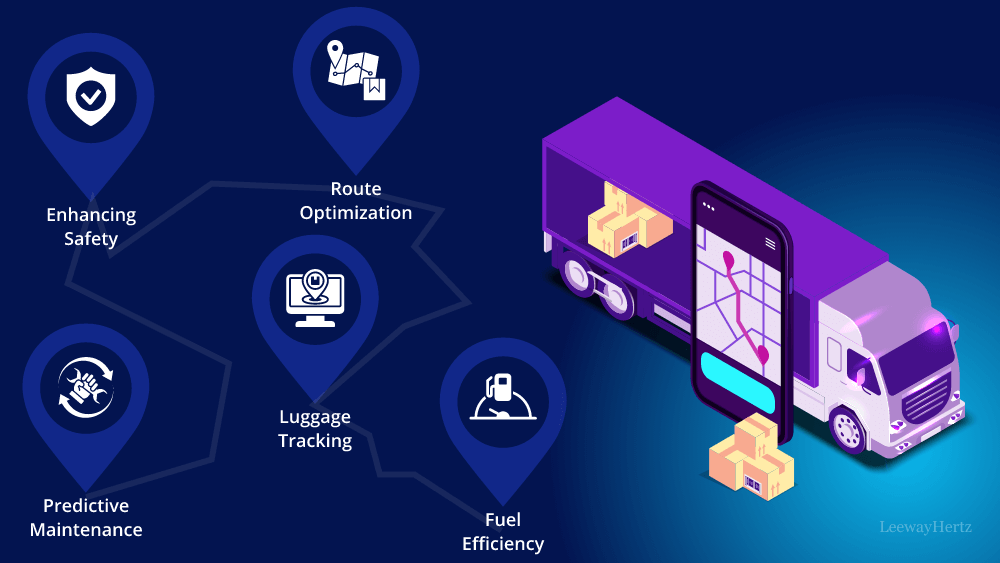
Benefits of AI in Fleet Management
Enhanced Predictive Maintenance
AI in fleet management revolutionizes maintenance practices. Through predictive analytics, AI algorithms analyze data from vehicles, predicting potential issues before they occur. This proactive approach minimizes downtime, extends vehicle lifespan, and lowers maintenance costs.
Optimized Route Planning
Machine Learning algorithms play a crucial role in optimizing route planning. By analyzing historical data, weather conditions, and traffic patterns, AI systems help fleets identify the most efficient routes. This not only saves time but also reduces fuel consumption, contributing to cost savings and environmental sustainability.
Real-time Monitoring and Tracking
Fleet management AI provides real-time monitoring and tracking capabilities. With GPS and sensor data, managers can track vehicle locations, monitor driver behavior, and receive instant updates on the fleet’s status. This enhances operational visibility, enabling quicker decision-making and improved resource allocation.
Machine Learning in Fleet Management
Driver Behavior Analysis
Machine Learning algorithms analyze driver behavior data, identifying patterns related to speeding, harsh braking, and other risky behaviors. This information allows fleet managers to implement targeted training programs, improving overall driver safety and reducing the risk of accidents.
Fuel Efficiency Optimization
ML algorithms analyze various factors affecting fuel efficiency, such as vehicle condition, driver behavior, and traffic conditions. By identifying optimal driving practices and suggesting improvements, AI contributes to significant fuel savings, reducing operational costs for fleet owners.
Predictive Analytics for Demand Forecasting
Machine Learning enables fleet managers to forecast demand more accurately. By analyzing historical usage patterns, seasonality, and other relevant factors, AI systems provide insights into future demand. This allows fleet managers to adjust their resources and optimize fleet size based on anticipated needs.
Fleet Management AI: A Game-Changer
Cost Reduction and Efficiency Improvement
The implementation of AI in fleet management leads to substantial cost reductions and operational efficiencies. Predictive maintenance, optimized route planning, and fuel efficiency improvements collectively contribute to a streamlined and cost-effective fleet management process.
Compliance and Risk Management
Fleet management AI assists in regulatory compliance and risk management. By monitoring driver behavior, ensuring adherence to safety regulations, and providing real-time alerts, these systems help businesses avoid penalties, reduce accidents, and enhance overall compliance with industry standards.
Data-Driven Decision Making
The wealth of data generated by AI in fleet management empowers decision-makers. Insights into vehicle performance, driver behavior, and operational patterns enable informed decision-making, fostering continuous improvement and adaptability in the ever-changing landscape of fleet management.
Conclusion
AI and Machine Learning are revolutionizing fleet management, offering a range of benefits from predictive maintenance to optimized route planning. As technology continues to advance, businesses that embrace these innovations will gain a competitive edge, ensuring their fleets operate at peak efficiency while minimizing costs and environmental impact. Fleet management AI is not just a technological upgrade; it’s a strategic investment in the future of efficient and sustainable transportation.
 Archie Evans Business