Introduction
In today’s dynamic business environment, accurate demand forecasting is crucial for organizations to optimize their supply chains and enhance operational efficiency. Traditional methods of demand forecasting often fall short in capturing the complexity of modern markets. This is where Artificial Intelligence (AI) steps in, offering advanced tools and techniques to revolutionize demand forecasting. In this article, we will explore the significance of AI in demand forecasting, various methods employed, and its applications in both supply chain management and retail.
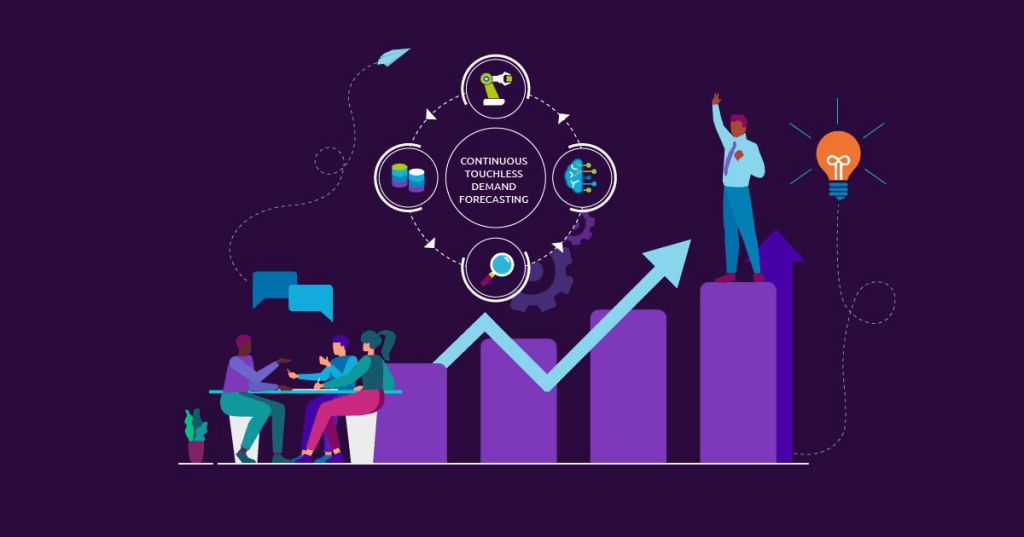
AI Demand Forecasting: A Game-Changer
AI has emerged as a game-changer in demand forecasting, providing businesses with the ability to analyze vast amounts of data and make predictions with unprecedented accuracy. Unlike traditional methods that rely on historical data and statistical models, AI utilizes machine learning algorithms to continuously learn and adapt to changing market conditions.
Methods of Demand Forecasting with AI
1. Machine Learning Algorithms
Machine learning algorithms lie at the heart of AI-powered demand forecasting. These algorithms can analyze historical data, identify patterns, and make predictions based on evolving market trends. Techniques such as regression analysis, time series analysis, and neural networks enable AI systems to adapt and improve over time, enhancing the precision of demand forecasts.
2. Big Data Analytics
The integration of AI with big data analytics allows businesses to leverage vast datasets from diverse sources. By analyzing this extensive information, AI systems can identify correlations, anomalies, and trends that may not be apparent through traditional forecasting methods. This results in a more comprehensive and accurate understanding of market dynamics.
3. Predictive Analytics
Predictive analytics is a powerful tool in AI demand forecasting. By combining historical data, real-time information, and external factors such as economic indicators or social trends, predictive analytics enables organizations to foresee demand fluctuations and make informed decisions accordingly.
Demand Forecasting in Supply Chain Management
AI’s impact on supply chain management is profound, especially in demand forecasting. By accurately predicting future demand, organizations can optimize inventory levels, reduce holding costs, and minimize the risk of stockouts or overstock situations. This leads to improved overall efficiency and cost-effectiveness in the supply chain.
Demand Forecasting in Retail
In the retail sector, where consumer behavior is constantly evolving, AI-powered demand forecasting is a game-changer. Retailers can analyze customer preferences, shopping patterns, and external factors such as weather or social media trends to anticipate demand. This enables retailers to stock the right products in the right quantities, enhance customer satisfaction, and ultimately boost sales.
AI for Demand Forecasting: Challenges and Future Prospects
While AI has revolutionized demand forecasting, it is not without its challenges. Data privacy concerns, the need for skilled professionals to manage AI systems, and the potential biases in algorithms are some issues that organizations must address. However, as technology continues to evolve, these challenges are expected to be mitigated.
The future of AI in demand forecasting looks promising. As AI systems become more sophisticated and organizations continue to invest in advanced technologies, the accuracy and efficiency of demand forecasting are likely to improve further. The integration of AI with other emerging technologies, such as the Internet of Things (IoT) and blockchain, will contribute to a more interconnected and responsive supply chain ecosystem.
Conclusion
In conclusion, AI demand forecasting is transforming the way businesses anticipate market trends, plan inventory, and manage supply chains. The adoption of AI methods in demand forecasting brings unprecedented accuracy, agility, and efficiency to organizations operating in both supply chain management and retail. As technology continues to advance, the synergy between AI and demand forecasting is expected to redefine industry standards and drive innovation in the years to come.
References:
 Archie Evans Business