In the ever-evolving realm of artificial intelligence and machine learning, Decision Transformers have emerged as a groundbreaking technology that promises to revolutionize the way we make decisions. These remarkable models are designed to tackle complex decision-making tasks, bringing a new level of sophistication to various applications across industries. In this article, we will delve into the world of Decision Transformers, exploring what they are, how they work, and their potential impact on various domains.
Understanding Decision Transformers
To comprehend the significance of Decision Transformers, it’s essential to first grasp the foundation upon which they are built. Decision Transformers are a subset of transformer models, a class of neural networks that have achieved remarkable success in various natural language processing (NLP) tasks. The rise of transformers, popularized by models like BERT and GPT, has demonstrated the power of attention mechanisms in capturing contextual information effectively.
Decision Transformers extend this concept into the domain of decision-making. These models are trained to process sequences of data and provide optimal decisions based on the information available. Unlike conventional machine learning algorithms, Decision Transformers excel in handling tasks where context and sequential reasoning are critical.
How Decision Transformers Work
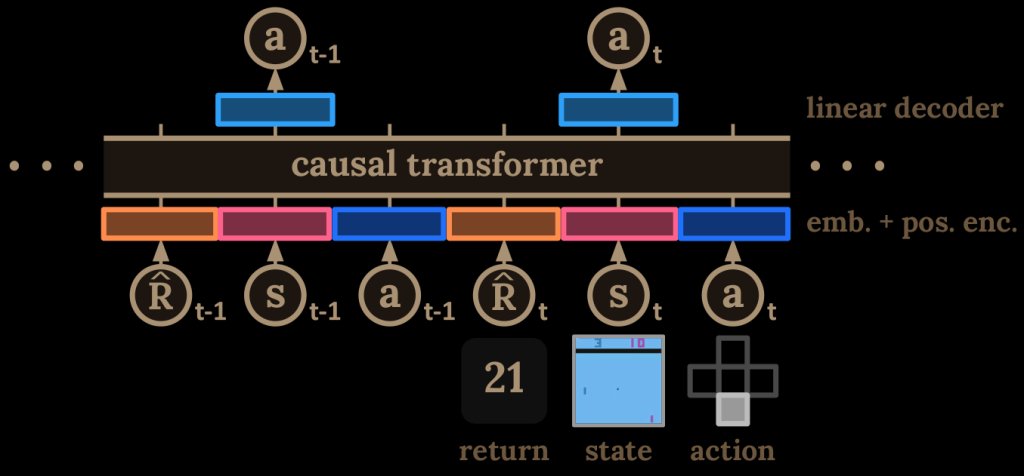
Decision Transformers leverage the same underlying architecture as standard transformers, which consists of attention mechanisms and multiple layers of self-attention. However, they are fine-tuned and adapted for decision-making scenarios. Here’s a simplified breakdown of how Decision Transformers work:
- Input Encoding: Just like their NLP counterparts, Decision Transformers begin by encoding the input data. This could be a series of observations, historical data, or any other relevant information needed to make a decision.
- Self-Attention: The model then employs self-attention mechanisms to weigh the importance of different elements in the input sequence. This step allows the model to focus on the most relevant pieces of information while considering the context.
- Layer Stacking: Decision Transformers consist of multiple layers, each refining the representation of the input data. The hierarchical structure of these layers enables the model to capture complex relationships and dependencies.
- Decision Output: Finally, Decision Transformers produce an output decision based on the processed information. This decision could be a classification label, a recommended action, or any other form of decision relevant to the task at hand.
Applications of Decision Transformers
The versatility of Decision Transformers lends itself to a wide range of applications across various domains. Here are some areas where Decision Transformers are making a significant impact:
1. Healthcare
In healthcare, accurate and timely decision-making can be a matter of life and death. Decision Transformers are being employed to assist medical professionals in diagnosing diseases, predicting patient outcomes, and recommending treatment plans. These models can analyze a patient’s medical history, lab results, and other relevant data to make informed decisions about their healthcare.
2. Finance
Financial institutions are using Decision Transformers to optimize investment strategies, detect fraudulent transactions, and assess credit risks. These models can process vast amounts of financial data and provide recommendations for investment decisions or risk management.
3. Autonomous Vehicles
Self-driving cars rely on Decision Transformers to navigate complex road scenarios. These models can process data from various sensors, including cameras and lidar, to make real-time decisions such as when to change lanes, accelerate, or brake.
4. Natural Language Processing
Decision Transformers are also making strides in natural language processing tasks, such as chatbots and virtual assistants. They can understand user queries, assess the context, and provide appropriate responses or actions.
5. Manufacturing
In manufacturing, Decision Transformers are used for quality control and process optimization. They can analyze sensor data from production lines to identify defects, predict equipment failures, and recommend adjustments to improve efficiency.
Challenges and Considerations
While Decision Transformers hold tremendous promise, they also come with their set of challenges and considerations:
1. Data Requirements
Training Decision Transformers typically requires large amounts of labeled data. Collecting and annotating such data can be costly and time-consuming, making it a barrier for smaller organizations.
2. Interpretability
Interpreting the decisions made by these models can be challenging. Understanding the reasoning behind a decision is crucial, especially in applications like healthcare and finance where accountability is paramount.
3. Ethical Concerns
As with any AI technology, there are ethical concerns surrounding Decision Transformers. Biased data or decision-making processes can lead to discriminatory outcomes. Ensuring fairness and transparency in these models is a significant challenge.
4. Computational Resources
Training and deploying Decision Transformers demand substantial computational resources. High-performance hardware and infrastructure are often necessary, which can be costly.
The Future of Decision Transformers
Despite these challenges, Decision Transformers are poised to play an increasingly significant role in our lives. As research and development continue, we can expect to see improvements in the efficiency, interpretability, and fairness of these models. Additionally, efforts to reduce data requirements and make Decision Transformers more accessible to smaller organizations are underway.
In conclusion, Decision Transformers represent a promising frontier in artificial intelligence and machine learning. By combining the power of transformers with the ability to make informed decisions, these models have the potential to transform industries and enhance decision-making processes across the board. As we continue to unlock their capabilities and address the associated challenges, Decision Transformers are set to shape the future of AI-driven decision-making.
 Archie Evans Business